

Nigerian parents urged to report adverse vaccine reactions
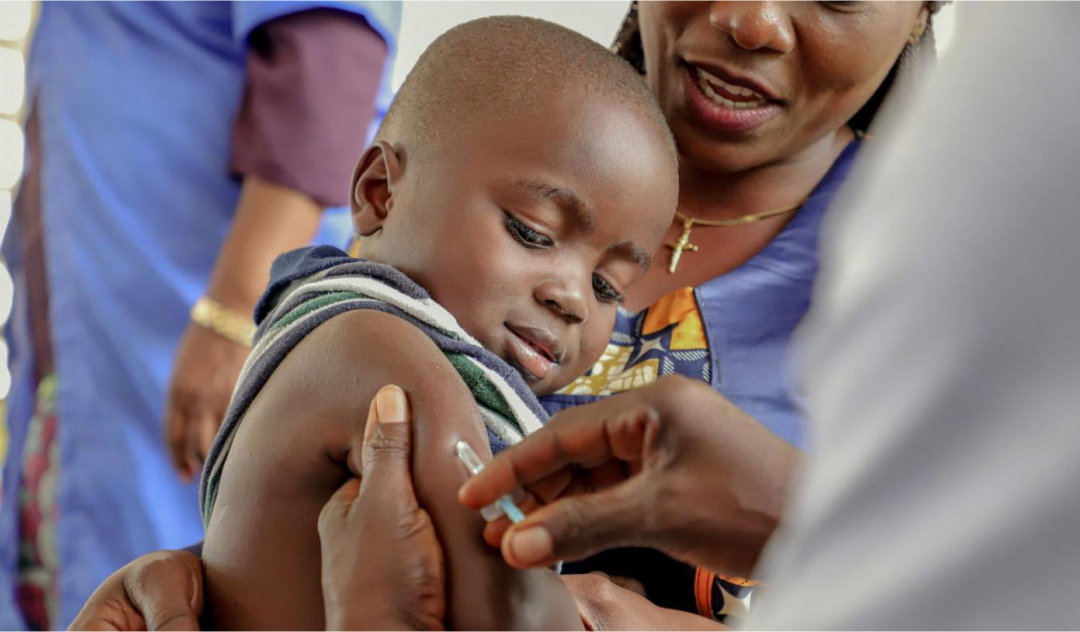
A consultant paediatrician, Folusho Balogun, has stressed the need for parents to always report any vaccine reactions experienced by their children to the immunisation clinic.
Ms Balogun, consultant paediatrician at the Institute of Child Health, University College Hospital, said this on Friday in Ibadan.
Ms Balogun, also the Oyo state team lead of the International Paediatrics Association and the Paediatric Association of Nigeria Immunisation Champions, said the reports should be used to improve vaccination programmes.
Ms Balogun urged clinics to encourage clients’ reports of Adverse Events Following Immunisation, do proper documentation and forward the records to the right quarters.
The paediatrician restated that the data should be stored and processed appropriately to inform policy and practice.
She added that the AEFI investigation committee should be visible to the public and active at local government, state and national levels.
According to her, it’s the pentavalent vaccine (the pertussis component) taken at six, 10 and 14 weeks that infants react to most.
“It causes fever and irritability, which usually subside within 12 to 24 hours. Parents are advised to give the infants paracetamol to control the reactions,” she said.
Ms Balogun cautioned that babies of HIV-positive mothers needed to be assessed by health workers to determine their fitness to take some vaccines, such as BCG.
She said the HIV-exposed infant should be evaluated before the commencement of immunisation.
“Common vaccine reactions are pain at the injection site, swelling which sometimes forms pus, redness, especially in light-skinned children, and sometimes convulsions.
“Parents are usually informed about the likely side effects before vaccine administration, and they are told what to do. For fever and pain, paracetamol is given; for swellings, a cold compress like an ice pack is used.
“For convulsion, the child should be laid on the left side till it subsides because most cases last for few minutes; then the child should be brought back to the clinic for evaluation,” she said.
Ms Balogun stressed that younger children, especially infants, were more likely to react to vaccines than older ones.
She added that the older the child, the less likely the chance of a reaction.
(NAN)

We have recently deactivated our website's comment provider in favour of other channels of distribution and commentary. We encourage you to join the conversation on our stories via our Facebook, Twitter and other social media pages.

More from Peoples Gazette

States
Independence: NBA urges Nigerians to expect better future
The NBA said that ordinary Nigerians should be deriving benefit from the subsidy removal rather than hardship.

Agriculture
FG tasks ECOWAS on leveraging financing strategies for agroecology
The federal government has urged stakeholders in the agriculture and finance sectors in the West Africa region to leverage financing strategies to enhance agroecology practices

Politics
Katsina youths pledge to deliver over 2 million votes to Atiku
“Katsina State is Atiku’s political base because it is his second home.”

World
Children among nine killed in U.S. by Perry Street mass shooter
Erie authorities confirmed the shooting happened on Perry Street in a statement, adding that the shooter is also dead.

Politics
2027: Over 30,000 Enugu teachers endorse Tinubu, Mbah for re-election
Mr Mba said teachers from communities across the 17 local government areas had gathered for the endorsement.

States
Gunmen kill three miners in Plateau
The incident occurred months after five miners were killed at a mining site after gunmen invaded Gero village, Gy district of the Jos South area of the state.

States
2027: Imo APC holds ‘one million-man march’ for Tinubu’s re-election
The party chairman urged supporters to intensify grassroots mobilisation ahead of the 2027 elections.

World
Death penalty violates human dignity, Pope Leo says as U.S. announces execution of Nidal Hasan by firing squad
Court-martialled in 2013, Mr Hasan was convicted of mass murder and has remained on death row.

States
Three suspects arrested in Niger for alleged theft, vandalism
The police said the vandalised cable and a cutlass were recovered as exhibits.


