

Why the next governor of Anambra matters more than the next president of Nigeria

There was a plan to build a light rail connecting all the five state capitals of the East and major cities and towns. There was a great development plan to turn Eastern Nigeria into the industrial heartbeat of Nigeria like Spanish Catalonia or the German Rhine-Ruhr.
There was a plan to secure for Eastern Nigeria a political structure that would guarantee the region an unrestricted right to self-determination, a kind of quasi-political independence the Scottish people in the UK enjoy.
These plans had remained nothing but words on paper because, for so long, the right political leaders have not emerged in Eastern Nigeria. As Nigeria spirals out of control, who becomes the next governor of Anambra State come March 2022 matters more than who becomes the next president of Nigeria.
Looking at how different political parties in Anambra State conducted their primaries last week for the November 2021 gubernatorial election, you would think that the upcoming election is just an ordinary election. The November 2021 election for governor of Anambra State is without question the most important in the state’s history.
It is probably the most consequential election since the division of Eastern Region of Nigeria in May 1967 into three new states. Who will move into the government house in Awka in March of 2022 has implications that go beyond Anambra State, beyond the five states of the East, and perhaps, beyond the old Eastern Region of the First Republic.
In a shaky Nigeria, as we have today, the next governor of Anambra State must be a smart, strong, and savvy man or woman who would not be intimidated by the federal government in Abuja. He or she needs to be someone that colleagues in the other four states and the people of the old Eastern Region respect. History may beckon on the governor to rise above the state and defend the interest of the old Eastern region.
When it comes to mobilising the people of Eastern Nigeria for a cause beyond themselves, we need a strong champion in Awka, Enugu, Abakaliki, Umuahia, and Owerri. Without a strong champion in Awka, who can mobilise Onitsha, Nnewi, and all of Anambra people in the Diaspora, the Eastern Region may fall short of the kind of solidarity needed to navigate the next phase of Nigeria’s trials and tribulations.
The state that produced Nnamdi Azikiwe, Chukwuemeka Odumegwu Ojukwu, and Chinua Achebe must have in its capital a ready-made leader waiting in the wings to lead the old Eastern Region should the situation arises.
So far, the characters running for governor of Anambra State cover the usual spectrum. The long defeated moneybags have not given up trying to govern the state. This is a trend we thought ended with the governorship of Chris Ngige. The pseudo-intellectuals, backed by the moneybags they are beholden to, are still in the arena. But, then, there are those that one could say fly with their wings.
In the last few rounds of elections, the people of the state had succeeded in electing relatively non-disruptive governors that built on the accomplishment of those before them. The improvement may not be astronomical, but they did not drag the state back in significant ways in things that matter most.
Chinwoke Mbadinuju proved that no matter how smart a governor is, he would be a disaster for the state and the people once he is in the armpit of some godfathers. Chris Ngige proved that when we put a governor under pressure to perform or perish, there are enough resources to develop a state, any state.
Peter Obi proved that when we trim the cost of governance, there would be enough resources to run a state and invest in the future of the state. Willie Obiano proved that once a structure is in place and a governor follows the template if the only desire is for incremental improvement, it does not matter who the governor is. But what Anambra State needs next is gigantic.
The time for incremental progress is over. Bold plans for the next 100 years are the kind of leadership goals that will save the state from environmental catastrophe due to inordinate growth, uneven development, and undiversified investments. Even in the best-case scenario for Nigeria, Anambra State needs a leader that will set in motion a coordinated developmental plan that will establish the Eastern region as the Spanish Catalonia of Nigeria or the German Rhine-Ruhr of Nigeria.
Anambra State needs a governor who will not just build roads and bridges, pay salaries and pensions, keep crime low and borrowing at a minimum, and protect the environment and the forests. Anambra state needs a governor who knows, not just the answer to the Igbo question, but also the question itself.
Anambra State needs a governor who can look at any character in Abuja in the eye and stand their ground. Be it in resource control, restructuring, protection of Igbo people anywhere in Nigeria and beyond, or in the worst case, in a possible breakup of Nigeria. Unfortunately, none of the current governors in Eastern Nigeria has the wherewithal to live up to these expectations.
Nigeria is in its most precarious situation since 1966. The time now is about a quarter to midnight of January 1966. The only difference is that the Igbo do not have enough men and women of character and moral fortitude in strategic places to answer the call. In so many ways, even in more dangerous ways, it is a few minutes before we get back to another 1966.
What happens in Anambra State does not stay in Anambra State. It travels across the five states of the South-East zone and beyond. It is for this reason that the November election for governor of the state is very vital. For better or for worse, who takes over the government house in Awka in January 2022 matters.
The repercussions of that choice will go beyond the state. What is at stake in Anambra is so important that we cannot hope that a fighter will sprout from the ground on the eve of the wrestling march.
Tufiakwa, if an akamogheli, efulefu, or agafu inherits the government house that sits on the ancient town of Awka, the oldest settlement in Igboland where great blacksmiths who were moulding the iron and bronze used to build Igbo civilisation once walked.
May the famous Agbala of Awka not allow Anambra State to be deprived of leaders when it matters most. May the chaotic political process of the day not make good leaders extinct the way hunters made extinct the once admired elephants of Awka.

We have recently deactivated our website's comment provider in favour of other channels of distribution and commentary. We encourage you to join the conversation on our stories via our Facebook, Twitter and other social media pages.

More from Peoples Gazette

States
Independence: NBA urges Nigerians to expect better future
The NBA said that ordinary Nigerians should be deriving benefit from the subsidy removal rather than hardship.

Agriculture
FG tasks ECOWAS on leveraging financing strategies for agroecology
The federal government has urged stakeholders in the agriculture and finance sectors in the West Africa region to leverage financing strategies to enhance agroecology practices

Politics
Katsina youths pledge to deliver over 2 million votes to Atiku
“Katsina State is Atiku’s political base because it is his second home.”

World
U.S. Attacks: Iran’s IRGC threatens to invade countries, strike American military bases
Iran’s Islamic Revolutionary Guard Corps has threatened to attack neighbouring countries and American bases amid renewed attacks from the United States.
States
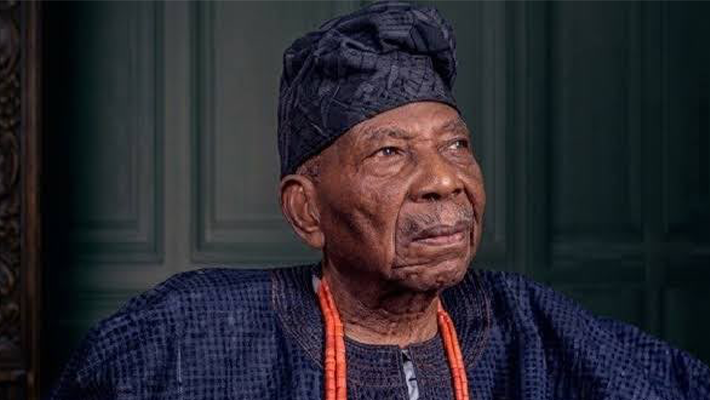
Family releases burial timetable for Afenifere leader Fasoranti
The family of the late Afenifere leader and elder statesman, Reuben Fasoranti, has announced burial arrangements for the Yoruba leader.
Anti-Corruption
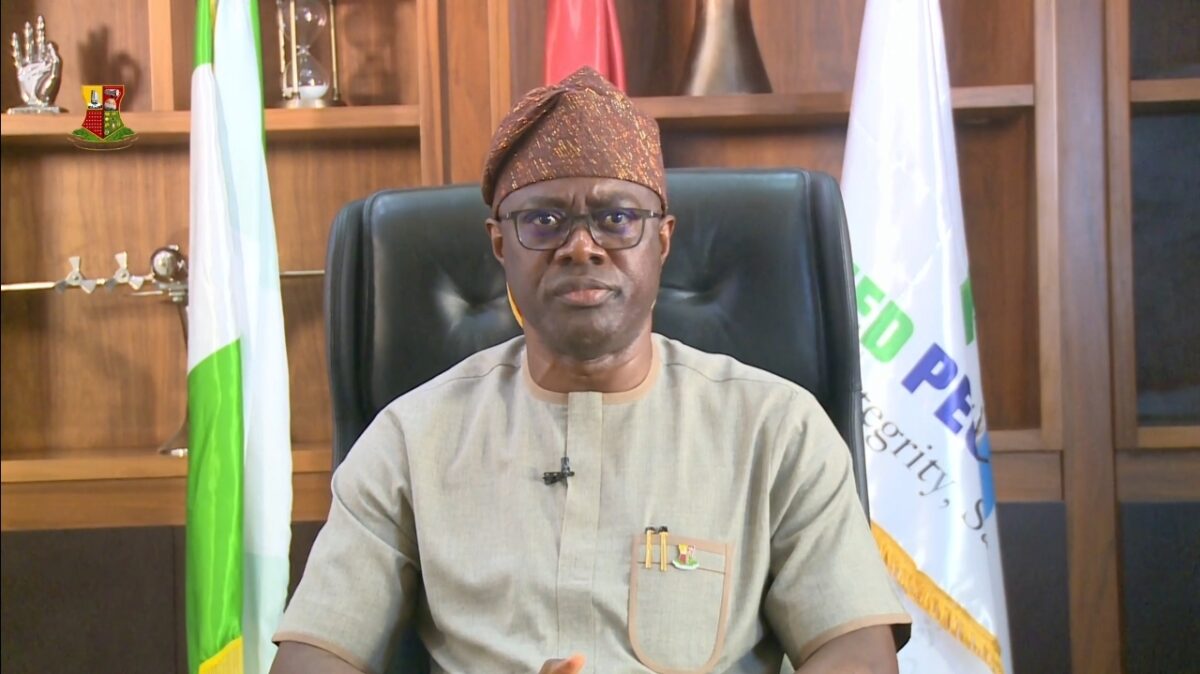
Lawyer petitions EFCC to probe Makinde’s spending, N30 billion Bodija explosion fund
A legal practitioner, Akinloye Olusegun, has petitioned EFCC to investigate Governor Seyi Makinde’s expenditures from his assumption of office in 2019 to 2026.
Education
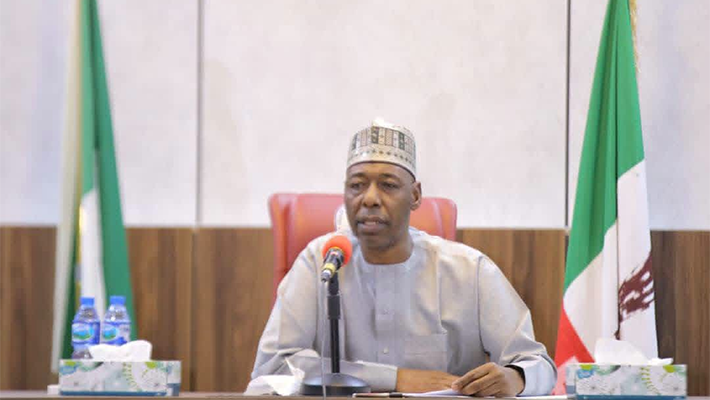
Gov Zulum seeks AU support to return 800,000 out-of-school children to classrooms
Mr Zulum pledged to strengthen the state’s partnership with the African Union to expand access to education for about 800,000 out-of-school children.
Rights
KSACA moves to standardise premarital medical certificates in Kano
It said the engagement also aimed to develop practical mechanisms for issuing and disseminating uniform premarital medical certificates across Kano’s 44 council areas.
Lagos
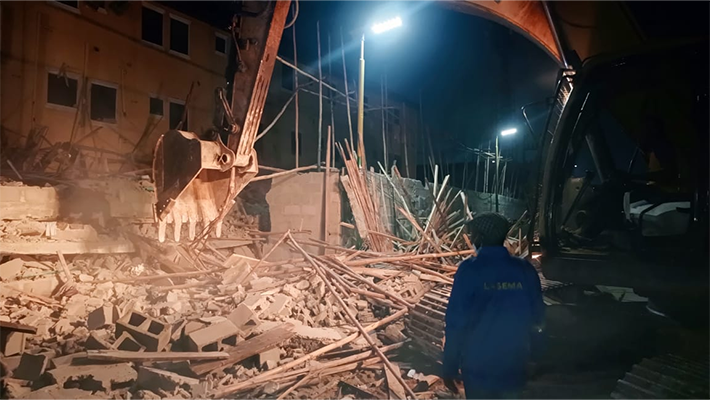
Lagos: At least one killed in Fadeyi building collapse
The Lagos government said the cause of the collapse had not yet been determined and relevant regulatory agencies would investigate it.


