

Taliban stopped 2.4 million girls from going to school in Afghanistan: UNESCO
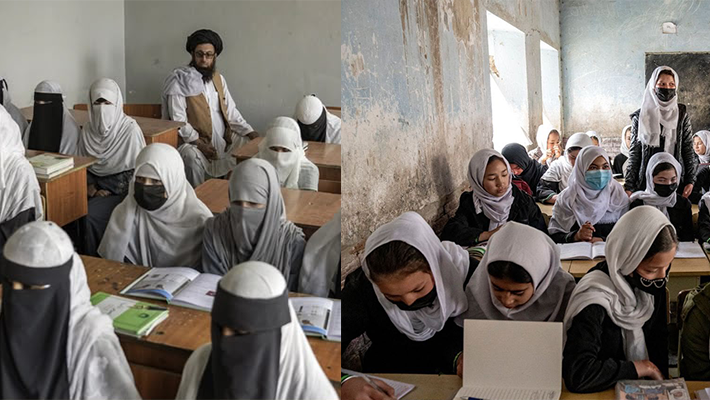
The United Nations Educational, Scientific and Cultural Organisation (UNESCO) has said that more than 2.4 million girls have been denied access to secondary education in Afghanistan since the Taliban took over the reins of power on August 15, 2021.
UNESCO warned in a report on Tuesday that the figure could surge to four million by 2030 following a rise of about 200,000 last year.
Women have also been denied the right to tertiary education since 2022, and they continue to “face severe restrictions” on employment and access to public spaces like parks, gyms and salons.
“Afghanistan remains the only country in the world where girls and women are formally banned from secondary and higher education,” said Hoda Jaberian, UNESCO’s programme coordinator for education in emergencies. “Five years is not a temporary interruption in a child’s education. It is clearly almost an entire secondary school cycle.”
After returning to power in 2021, the Taliban initially assured the international community that girls would be allowed to continue their education.
However, in 2022, it closed secondary schools to girls and later that year banned women from attending universities. Female teachers were also dismissed and replaced by unqualified teachers or no teachers at all.
Human Rights Watch warned in 2023 that, due to curriculum changes, corporal punishment, and the dismissal of female teachers, education for boys in Afghanistan is at risk in the long term under Taliban rule.
The restrictions, Ms Jaberian said, have disrupted years of progress in girls’ education. She noted that few girls attended primary school in 2001, but by 2021, nearly one million were enrolled in secondary education.
“Afghanistan had made really major progress in expanding girls’ access to education,” Ms Jaberian said. “But unfortunately, much of that progress now has been completely reversed.”
UNESCO estimated that at least 600,000 women could be unemployed by 2026 because of the restriction, which it said could also result in an estimated $9.6 billion in cumulative income losses and increase the risk of early marriage.
It added that the ban could also result in a shortage of more than 11,000 female teachers by 2030.
“Many teachers have left the country, and those who were in the system are banned from continuing teaching,” Ms Jaberian said.
The agency urged Afghanistan to restore girls’ right to secondary and higher education immediately. It noted that it provides “alternative learning opportunities through community-based literacy, skills development, and psychosocial support”.

We have recently deactivated our website's comment provider in favour of other channels of distribution and commentary. We encourage you to join the conversation on our stories via our Facebook, Twitter and other social media pages.

More from Peoples Gazette

States
Independence: NBA urges Nigerians to expect better future
The NBA said that ordinary Nigerians should be deriving benefit from the subsidy removal rather than hardship.

Agriculture
FG tasks ECOWAS on leveraging financing strategies for agroecology
The federal government has urged stakeholders in the agriculture and finance sectors in the West Africa region to leverage financing strategies to enhance agroecology practices

Politics
Katsina youths pledge to deliver over 2 million votes to Atiku
“Katsina State is Atiku’s political base because it is his second home.”

Heading 1
Gbenga Daniel urges Nigerians to demand accountability ahead of 2027 elections
The senator urged voters to prioritise performance, reject violence and defend democratic values.

World
Kate Zacharia resigns after four days as Donald Trump’s press secretary
Ms Zacharia drew scrutiny for referring to herself as a lawyer despite never having passed the bar exam.

Heading 5
Inauguration: Tinubu urges Oyebanji to deliver more dividends of democracy
The president described Mr Oyebanji’s victory as a testament to the trust reposed in his administration.
States
NOA unveils reporting platform to counter violence in Bauchi schools
The director stressed the need for effective synergy among stakeholders to guarantee children’s right to education.

Agriculture
FAO inaugurates Nigeria youth-led agrifood transformation forum
The unveiling positions Nigeria within a growing global network of over 100 WFF chapters worldwide.

Hot news Home top
Tinubu spent N9 trillion of NLNG dividends meant for 36 states, promised to return it after election: Seyi Makinde
Mr Makinde said Mr Tinubu had assured the governors that the funds would be paid after the elections.


