

Technology crucial to success of new tax laws: NRS Chairman Adedeji

The Executive Chairman of the Nigerian Revenue Service (NRS), Zacch Adedeji, has described technology as a crucial factor in the implementation of the new tax laws in the country.
Mr Adedeji stated this on Wednesday while delivering the maiden convocation lecture of the Federal Polytechnic, Ayede, Ogo-Oluwa Local Government Area of Oyo State.
In a statement by his Technical Assistant on Print Media, Sikiru Akinola, Mr Adedeji listed some of the most fundamental challenges confronting taxation to include infrastructure, skills, trust and resistance.
In the lecture titled, “The Role of Technology in Implementing Nigeria’s New Tax Laws: Challenges, Prospects, and Implications for National Development,” the NRS chairman said each of the challenges would be addressed with the imminent upgrading of the country’s tax system for a digital environment.
Mr Adedeji stated, “Nigeria has recently enacted a new set of tax laws, representing the most significant restructuring of our nation’s fiscal legislation in 50 years. While public conversation often frames these changes as legal reforms, and that is true, it is also an incomplete picture.
“These laws are not merely changing rates, definitions, or administrative powers. They are quietly redefining how authority operates within the tax system. This is a complete structural overhaul, signaling the end of tax collection as a manual task and the beginning of tax intelligence.
“If you read the new laws carefully, you will notice a subtle but profound assumption woven throughout their fabric. They presuppose the existence of reliable taxpayer identification, integrated data across institutions, traceable transactions, automated processes, and scalable enforcement.
“In other words, these laws are built for a digital environment. They cannot function properly in a manual, fragmented, paper-based system. The implication is clear: without technology, the laws remain aspirational. With technology, they become operational.
“This transition is central to the mandate of the Nigeria Revenue Service as we implement this new legal framework. Historically, tax administration relied heavily on human discretion over who is registered, who is assessed, who is audited, and who is penalised.
“While discretion is not inherently evil, excessive discretion creates inconsistency, which in turn breeds mistrust and drives non-compliance.”
Speaking further, he noted that when infrastructure improves, capacity grows, trust is protected, and resistance is managed just as technology begins to do what policy alone cannot.
“One of the most important prospects of a technology-driven tax administration is the ability to expand the tax base without increasing tax rates. This matters deeply in a society where citizens already feel overburdened.
“By improving visibility and bringing previously unseen economic activity into view, technology levels the playing field. When compliance broadens, the pressure on the existing base reduces,
fairness improves, and legitimacy grows. This is how modern tax systems grow revenue sustainably,’ he added.
In his remark, the Speaker of the House of Representatives, Tajudeen Abass, encouraged the graduating students to be good ambassadors of the institution.
Represented by AbdulFatai Buhari, senator representing Oyo North, Mr Abass charged them not to relent in their bid to acquire more knowledge.
He also commended the tax boss for leading the change in tax administration in the country.
The institution’s governing council chair, Yakubu Datti commended Mr Adedeji for leading the re-engineering of Nigeria’s tax architecture.
The Rector of the institution, Dr. Taofeek Adekunle Abdul-Hameed, charged the graduating students to emulate Mr Adedeji who, he said, began his journey from a polytechnic.

We have recently deactivated our website's comment provider in favour of other channels of distribution and commentary. We encourage you to join the conversation on our stories via our Facebook, Twitter and other social media pages.

More from Peoples Gazette

Agriculture
FG tasks ECOWAS on leveraging financing strategies for agroecology
The federal government has urged stakeholders in the agriculture and finance sectors in the West Africa region to leverage financing strategies to enhance agroecology practices

Politics
Katsina youths pledge to deliver over 2 million votes to Atiku
“Katsina State is Atiku’s political base because it is his second home.”
States
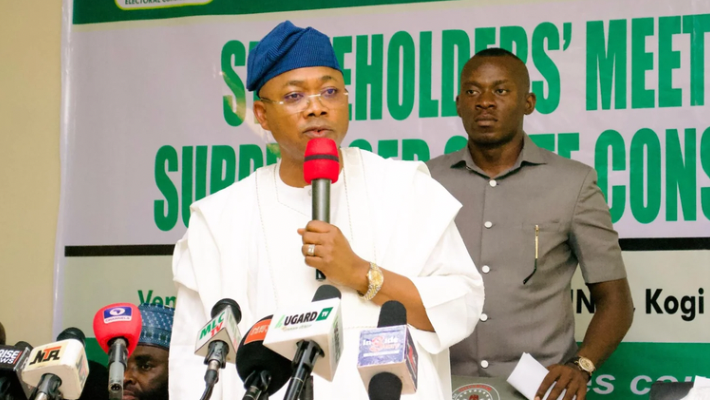
Tinubu advised me never to negotiate with criminals, Gov Ododo says
“I don’t play with criminals, and I don’t negotiate with them. I can tell you that, as far as Kogi State is concerned, we don’t have a department for ransom payment,” he said.

Heading 1
U.S. has spent $37.5 billion on Iran war: Hegseth
“The estimate we have as of today is $37.5 billion,” Mr Hegseth said.
Lagos
Slain Lagos NURTW organising secretary buried amid tears
Mr Ajiboye died days after he was attacked by gunmen.

Africa
144 refugees, migrants dead, missing off Mauritania coast: UNHCR
“The refugees and migrants were reported dead or missing after attempting the perilous sea journey from West Africa towards Europe,” the agency said.

World
U.S. govt condemns Ortega’s ban on elections in Nicaragua
Mr Rubio urged the international community to rise against Mr Ortega’s dictatorship.

World
Zelensky sacks Ukraine’s top general after firing defence minister
Mr Syrskyi’s dismissal came days after Mr Zelensky fired Ukraine’s defence minister, Mykhailo Fedorov, a decision that sparked protests across the country.


