

The hunger, insecurity Bayo Onanuga refuses to see
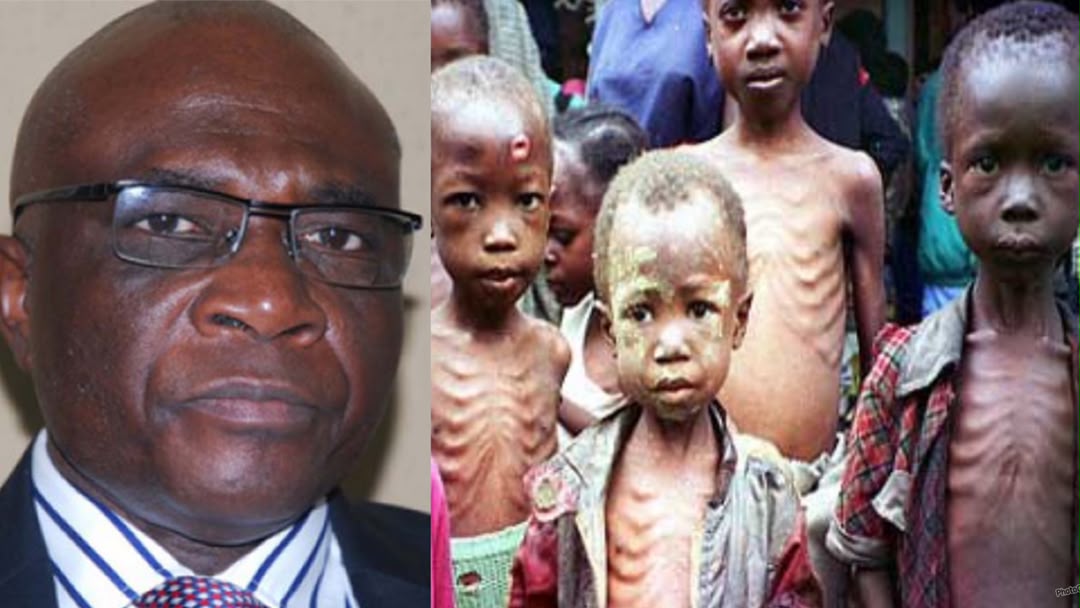
I have never seen or heard someone make several ridiculous and weak claims in one interview like those that were made by President Bola Tinubu’s spokesperson, Bayo Onanuga, on Arise Television’s Prime Time programme on Tuesday, where he defended the policies of Tinubu, dismissing claims of widespread hunger and insecurity across the country.
In the interview that has since gone viral, Onanuga made three central arguments. First, he said that the level of hunger that Nigerians complain about was exaggerated. Second, he said federal government reforms are producing positive results; lastly, he said media reporting was exaggerating perceptions of hardship and insecurity.
When asked about the hardship and hunger in the country, Onanuga replied with this weak point, saying, “I am a Nigerian, I have people working for me privately. I don’t see the level of hunger people are talking about because I see them (the workers) and keep asking them questions. How are things? How are they adjusting? What are the problems?”
Onanuga must know that one’s personal observation was not a reliable measure of national economic reality. He says that he does not see the hunger Nigerians talk about because he regularly interacts with people who work for him and asks how they are coping. In a country of more than 220 million people, Onanuga talks to a few of his employees and concludes that millions of Nigerians are not hungry but living in prosperity.
It is either Onanuga’s employees are lying to him because they worry that telling him the truth might cost them their jobs, or he pays them millions of naira as salary every month to live above the poverty line. Everyone who lives in Nigeria knows that the cost of living has drastically increased since Tinubu assumed office as president on May 29, 2023.
A bag of rice currently hovers between Nigeria’s national minimum wage of N70,000 and N100,000. Food insecurity remains a major challenge. This is according to assessments by Nigeria and the United Nations. The World Food Programme says approximately 35 million Nigerians are facing food insecurity due to inflation, economic pressures, and insecurity affecting agricultural production. Onanuga’s claim cannot substitute for data collected by the Nigerian government, international organisations, economists, and development experts.
To Onanuga’s boss’s credit, Nigeria’s national minimum wage was increased by more than 100% in 2024. His argument that this was sufficient evidence that the Tinubu administration had improved Nigerians’ standard of living, including addressing hunger, does not add up economically. Wages must be evaluated against rising inflation.
While Nigeria’s headline inflation rate is 15.93%, food inflation is 16.96%, and core inflation is 16.82%. The headline inflation is driven primarily by rising food and transport costs. The persistent price pressures have forced many Nigerian households to make drastic survival choices, including rationing their food and relocating to cheaper areas or states.
Yes, the World Bank has acknowledged improvements in macroeconomic stability and growth under the Tinubu administration’s recent reforms. However, an economy can improve on paper with GDP growth and stronger reserves while citizens continue to suffer in real life. The same World Bank that has praised the Tinubu administration’s reforms has warned that high food prices and poverty continue to place enormous pressure on households.
The challenge for the Tinubu administration is that macroeconomic success and household well-being are not the same thing. Governments are ultimately judged less by economic theory than by their citizens’ lived experience. Citizens assess their government’s policies through the prices they pay in markets, the jobs available to them, and their ability to feed their families.
Now, when we look at insecurity, Onanuga’s accusation that the media was exaggerating this issue is weak and baseless. Since Tinubu became president, at least 19,980 fatalities and over 12,000 abductions have been documented across Nigeria. This is according to independent tracking databases, civil society organisations (CSOs), and media reports.
The coordinated massacre by armed gunmen across over 20 communities in Bokkos and Barkin Ladi LGAs of Plateau on Christmas Eve of December 2025, which left at least 140 to 200 people killed, is not an exaggeration of insecurity by the media. What about the Jos North and Kaduna night raids in March 2026, where gunmen carried out brutal night raids in the Anguan Rurukaba district of Jos and Kagoro LGA in Kaduna, leaving at least 40 civilians dead.
These massacres and abductions by gunmen are not figments of the media’s imagination. They are real-life stories that happened to real Nigerians. Take, for example, the bombings in Mangu and Gwoza in Borno, which happened in mid-2023 and 2024, during which suspected Boko Haram insurgents targeted weddings and funerals with suicide bombs.
Then we have the following mass abductions: The Kuriga school abduction of March 2024; the FCT/Bwari suburb raids of late 2023 and early 2024, which happened in the heart of the seat of power; the Kebbi schoolgirls abduction of November 2025; the Askira-Uba students abduction; and the recent Ekiti and Oriire abductions in mid-2026. These are not exaggerated reports. These are real-life incidents that happened to real-life Nigerians like Onanuga.
When international and national agencies, as well as the media, warn that tens of millions face food insecurity, when food inflation remains a major concern, and when insecurity and cost of living have drastically increased, many Nigerians who live in this reality will view this kind of statements from Onanuga minimising hunger and insecurity as detached from reality.
Onanuga could have made a stronger defence of the Tinubu administration’s policies if he had acknowledged the hardship that Nigerians are facing while arguing that reforms require time to deliver results. Denying or downplaying those hardships risks undermining the credibility of the very economic achievements the administration he works for wants to highlight.
Maduekwe is a communications professional. Write him: mrmaduekwe@gmail.com

We have recently deactivated our website's comment provider in favour of other channels of distribution and commentary. We encourage you to join the conversation on our stories via our Facebook, Twitter and other social media pages.

More from Peoples Gazette

States
Independence: NBA urges Nigerians to expect better future
The NBA said that ordinary Nigerians should be deriving benefit from the subsidy removal rather than hardship.

Agriculture
FG tasks ECOWAS on leveraging financing strategies for agroecology
The federal government has urged stakeholders in the agriculture and finance sectors in the West Africa region to leverage financing strategies to enhance agroecology practices

Politics
Katsina youths pledge to deliver over 2 million votes to Atiku
“Katsina State is Atiku’s political base because it is his second home.”

Heading 1
EFCC chair warns Nigerian girls against dating Yahoo boys, sextortionists
Mr Olukoyede decried the rising incidents of sextortion in the country.

Politics
2027: Fubara playing active role in Rivers political team, says Wike
Mr Wike said Mr Fubara remains an integral and active part of the ruling political team.

Africa
2027 AFCON: Tanzania, Kenya, Uganda plan joint visa for football fans
Kadaga said the proposed arrangement would enable fans to attend matches in different countries and visit tourist attractions.

Hot news Home top
NCC to block cloned, counterfeit phones from Nigerian mobile networks, registers 231 million devices
Mr Ogoh said the checks also apply to other SIM-enabled equipment, including tablets, modems and PoS terminals.

Education
FG assures NASU of continued dialogue on workers’ welfare
The minister urged NASU to sustain dialogue, collective bargaining and tripartite engagement as effective mechanisms for resolving industrial disputes.
States
Yobe govt. donates 160 motorcycles, operational equipment to forest guards
The SSG said the equipment also includes 900 raincoats, 900 rain boots, 900 blankets, 900 torchlights, and 900 mosquito nets.


