

Why Nigeria must not repeat 2025 budget disaster this year

In May 2025, BudgIT, a civic tech policy group, revealed that Nigeria’s 2025 budget includes 11,222 new projects added by lawmakers after the executive submitted the budget. These additions total nearly $4.7 billion USD, which is over 12 per cent of the national budget. The insertions have raised concerns among economists and civil society groups about transparency and potential underlying political motivations.
When budgets are manipulated in this way, transparency is limited, and citizens are denied the accountability they deserve. Furthermore, budget manipulation diverts limited resources, creates economic imbalances, and restricts citizens’ economic freedom, which ultimately hinders economic growth. To address this problem, Nigeria needs a legal review to define clear limits on lawmakers’ budgetary powers and to strengthen the enforcement of public project reviews.
The problem goes beyond the size of new spending to include poor targeting and weak implementation capacity. BudgIT’s report revealed that the agriculture sector’s allocation alone increased from $162 million to $1.3 billion. Many of these projects are routed through agencies that lack the technical capacity to implement them. It shows how arbitrary insertions distort sectoral priorities and undermine efficiency. It also raises serious concerns about wastage, especially in a country struggling with inflation, rising debt, and inadequate public services.
BudgIT’s report highlights four serious concerns: transparency, legality, planning, and risk of failure. Excluding the public from reviewing or debating these new projects has reduced transparency. Legally, the Fiscal Responsibility Act permits lawmakers to amend, but not to inflate, the budget. In terms of planning, the inserted projects do not align with Nigeria’s medium-term development plan.
To address the problem of lawmakers’ unchecked budget amendments, Nigeria must combine legal reforms with greater transparency to achieve greater effectiveness. The Federal Government, with guidance from the Supreme Court, should clarify and codify the limits of lawmakers’ powers to amend the national budget. While the Fiscal Responsibility Act permits some legislative adjustments, it does not allow for substantial inflation that distorts priorities and undermines fiscal discipline. Seeking constitutional clarification from the Supreme Court would define the boundaries of the National Assembly’s budgetary authority and prevent misuse in future budget cycles.
Complementing this legal clarification, a legislated cap, such as limiting amendments to three per cent of the total budget, would preserve legislative input while ensuring that fiscal responsibility is maintained. Coordination with the Fiscal Responsibility Commission would further institutionalise enforcement, helping to prevent arbitrary allocations and align spending with the country’s medium-term development plans. By grounding budgetary changes within clear legal limits, Nigeria can safeguard against resource diversion, sectoral distortions, and the inefficiencies that arise from poorly targeted projects.
Equally important is strengthening transparency and public participation to ensure that budget decisions are subject to scrutiny and accountability. Citizens, civil society organisations, journalists, and community representatives must be given structured opportunities to engage with the budget, especially regarding projects inserted after the executive’s submission. This measure could take the form of regional consultations, accessible online portals for feedback, and simplified budget summaries that make complex allocations understandable to the public.
In addition, every project inserted into the budget should be disclosed on an open-access dashboard managed by the Budget Office, detailing its location, cost, responsible agency, and quarterly updates on implementation.
A multi-stakeholder task force, comprising civil society actors, community representatives, and legislative observers, would monitor these projects and flag abandoned, duplicated, or mismanaged initiatives. Together, these measures would ensure that public funds are directed toward genuine national priorities, enhance citizen trust, foster a culture of accountability, and support the legal and institutional reforms that guard against misuse.
By combining clear legal boundaries with rigorous transparency, Nigeria can effectively protect its limited resources, enhance efficiency, and ensure that the budget serves the genuine needs of its citizens.
Nigeria cannot afford to waste another year. Every dollar misallocated is a child who misses a school desk, a patient denied care, a road left unfinished. Such waste also deepens distrust in democratic institutions. The time to act is now for the sake of the people, the institutions, and the nation’s future.
Adenike Baderin is a writing fellow at African Liberty.

We have recently deactivated our website's comment provider in favour of other channels of distribution and commentary. We encourage you to join the conversation on our stories via our Facebook, Twitter and other social media pages.

More from Peoples Gazette

States
Independence: NBA urges Nigerians to expect better future
The NBA said that ordinary Nigerians should be deriving benefit from the subsidy removal rather than hardship.

Agriculture
FG tasks ECOWAS on leveraging financing strategies for agroecology
The federal government has urged stakeholders in the agriculture and finance sectors in the West Africa region to leverage financing strategies to enhance agroecology practices

Politics
Katsina youths pledge to deliver over 2 million votes to Atiku
“Katsina State is Atiku’s political base because it is his second home.”

World
Trump urges Macron to close France border amid violent protests
Mr Trump urged France which he described as once great country to tighten migration rules.
Heading 5
2027: APC knocks Makinde’s campaign group over comment to defeat Tinubu in 12 states
The ruling party noted that the 2027 presidential election was not a theatrical performance.
Heading 4
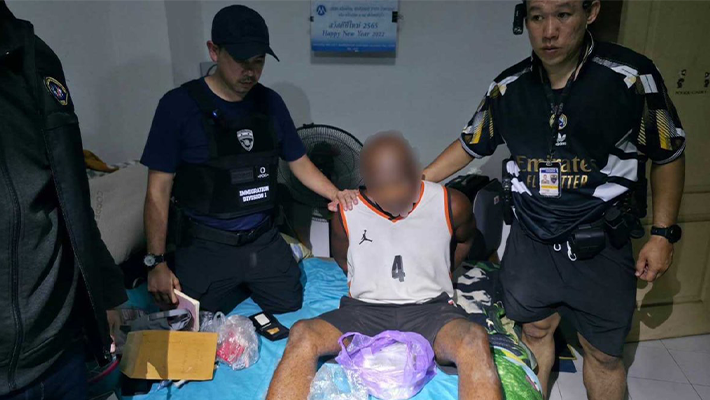
Thai immigration officers nab three Nigerians in 103 grammes of cocaine seizure
Officials estimated that the cocaine seized from Mr D was worth N16 million in street value.

Hot news Home top
ADC kicks over Tinubu’s nomination of Sokoto governor Ahmad Aliyu’s brother as INEC REC for North-West
The ADC noted, “The credibility of INEC in 2027 demands answers before confirmation, not explanations after the election.”
Heading 1
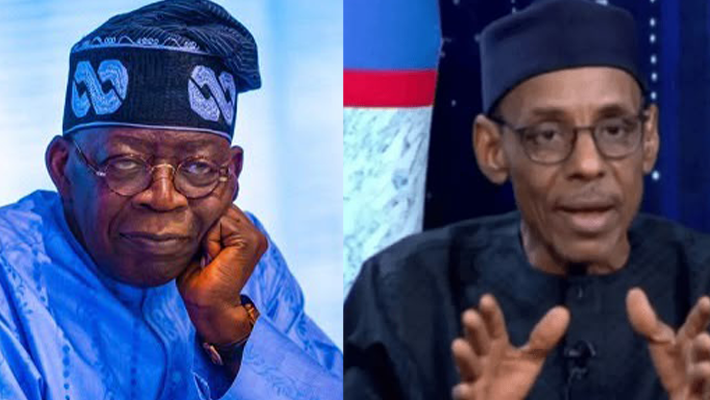
Buhari was reluctant to hand over power to Tinubu, saw him as bad news for Nigeria: Baba-Ahmed
Mr Baba-Ahmed said “Nigerians ought to have known there was something wrong the day Tinubu said, ‘It’s my turn.’ Maybe we missed it.”
Hot news Home top
HURIWA kicks over INEC chairman’s redeployment of Segun Sowunmi’s wife to oversee 2027 polls
HURIWA faulted Ms Adeyemi-Showunmi’s redeployment based on her husband’s loyalty and support for President Bola Tinubu’s re-election.


