

CBN ends recapitalisation as lenders raise N4.65 trillion, 33 meet requirements
The Central Bank of Nigeria has concluded a two-year effort to strengthen the banking system, saying lenders raised N4.65 trillion in fresh capital and largely met new, tougher requirements aimed at supporting economic growth.
The apex bank disclosed this in a Wednesday statement, jointly signed by Director, Banking Supervision, Olubukola Akinwunmi, and the Acting Director, Corporate Communications, Hakama Ali.
The recapitalisation process, launched in March 2024, required banks to increase their minimum capital base, a move designed to make them stronger, more resilient to shocks and better able to finance a larger economy.
The CBN said 33 banks have met the revised minimum capital requirements, showing better compliance across the sector.
A small number of banks are still undergoing regulatory and judicial processes, which the CBN said are being handled within existing legal and supervisory frameworks.
“All banks remain fully operational, ensuring continued access to banking services for customers,”it said.
Investors confidence
The exercise drew commendable participation from both local and foreign investors, showing confidence in the banking sector despite economic headwinds.
According to the CBN, 72.55 per cent of the capital was raised locally, while 27.45 per cent came from international investors.
The scale of the capital raised shows the depth of the exercise, which is one of the largest banking sector fund-raising efforts in Nigeria in recent years.
The last major recapitalisation was carried out in 2004 under then CBN Governor Charles Soludo, when the minimum capital requirement for banks was increased to N25 billion.
The CBN Governor, Olayemi Cardoso, in the statement said the programme strengthened banks’ ability to withstand economic pressure and support growth.
“The recapitalisation programme has strengthened the capital base of Nigerian banks, reinforcing the resilience of the financial system and ensuring it is well-positioned to support economic growth and withstand domestic and external shocks.”
Stronger buffers
The CBN said banks are now operating with stronger capital buffers, with capital adequacy ratios remaining above international Basel standards.
Minimum ratios remain 10 per cent for regional and national banks and 15 per cent for banks with international licences.
“The programme has strengthened capital adequacy ratios (CAR), with the sector maintaining levels above international Basel benchmarks. Minimum CAR thresholds remain at 10% for regional and national banks and 15% for banks with international authorization,”it said.
The recapitalisation was also implemented alongside a gradual withdrawal of regulatory forbearance, a step the CBN said improved asset quality and made bank balance sheets more transparent.
Stricter supervision
With capital raising completed, the CBN said it is tightening oversight to ensure banks remain resilient.
Banks are now required to carry out regular stress tests and maintain sufficient capital buffers to absorb potential shocks, particularly in a volatile economic environment.
The regulator added that its supervisory and prudential frameworks would be reviewed periodically to strengthen governance and risk management across the sector.
The bank said the recapitalisation was completed without disrupting banking operations, allowing customers and businesses to maintain uninterrupted access to financial services.
With the exercise now concluded, attention is shifting to how banks will use their stronger capital positions.
The focus now will shift to whether stronger balance sheets will translate into more lending, and whether the raised capital is enough to withstand economic and operational stress.

We have recently deactivated our website's comment provider in favour of other channels of distribution and commentary. We encourage you to join the conversation on our stories via our Facebook, Twitter and other social media pages.

More from Peoples Gazette

States
Independence: NBA urges Nigerians to expect better future
The NBA said that ordinary Nigerians should be deriving benefit from the subsidy removal rather than hardship.

Agriculture
FG tasks ECOWAS on leveraging financing strategies for agroecology
The federal government has urged stakeholders in the agriculture and finance sectors in the West Africa region to leverage financing strategies to enhance agroecology practices

Politics
Katsina youths pledge to deliver over 2 million votes to Atiku
“Katsina State is Atiku’s political base because it is his second home.”

Heading 4
Slovakia opens new visa appointment portal for Nigerian students, others from November
Foreign students and researchers are not required to register themselves in RegVIS portal.

Heading 1
Cyprus blacklists six Nigerians over public security concerns
The government did not immediately disclose the specific allegations against each of the individuals.
States
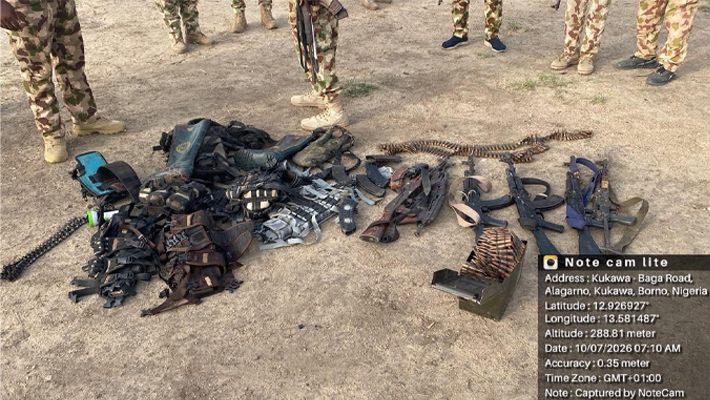
25 terrorists killed as troops repel ISWAP attacks in Borno
Mr Goni noted that some soldiers paid the supreme sacrifice during the encounter.

Hot news Home top
Man nabbed while allegedly sitting FCTA promotion exam for his father
The suspect confessed that his father asked him to sit the exam on his behalf.

Africa
BAL unveils six refurbished basketball courts in Nigeria, Senegal, Côte d’Ivoire
Mr Fall said the projects demonstrated the league’s commitment to community investments across Africa.

World
Trump says Islam driving protests in France to take over
“What’s happening in France is nothing less than out of control mass migration,” Mr Trump said.


