

World Bank projects steady global growth in spite of uncertainties

The World Bank says the global economy is showing greater resilience than earlier anticipated, despite persistent trade tensions and policy uncertainty.
The bank said this in its latest Global Economic Prospects report, released on Tuesday, which projects global growth to remain broadly steady over the next two years.
According to the report, global growth is expected to ease to 2.6 per cent in 2026 before rising slightly to 2.7 per cent in 2027, representing an upward revision from its June 2025 forecast.
It said the improved outlook reflected better-than-expected performance in several economies, particularly the United States, which accounts for about two-thirds of the upward revision to the 2026 forecast.
The report, however, said that if the projections held, the 2020s would still be the weakest decade for global growth since the 1960s.
The report said the slow pace of growth was widening the gap in living standards, as nearly all advanced economies had per capita incomes above their 2019 levels by the end of 2025, “while about one in four developing economies had lower per capita incomes.”
The report said growth in 2025 was supported by a surge in trade ahead of policy changes and rapid adjustments in global supply chains.
It said that these factors were expected to fade in 2026 as trade and domestic demand softened.
It, however, said that the easing global financial conditions and fiscal expansion in several large economies should help cushion the slowdown.
According to the report, global inflation is projected to decline to 2.6 per cent in 2026, driven by softer labour markets and lower energy prices, while growth is expected to strengthen in 2027.
Indermit Gill, the World Bank Group’s chief economist and senior vice president for development economics, said that with each passing year, the global economy has become less capable of generating growth.
Mr Gill said the global economy had become seemingly more resilient to policy uncertainty.
He said that economic dynamism and resilience could not diverge indefinitely without straining public finance and credit markets.
He said the world economy was set to grow more slowly than in the 1990s while carrying record levels of public and private debt.
Mr Gill urged governments in both emerging and advanced economies to liberalise private investment and trade, rein in public consumption, and invest in technology and education to avert stagnation and rising unemployment.
The report projected that growth in developing economies would slow to 4.0 per cent in 2026 from 4.2 per cent in 2025 before edging up to 4.1 per cent in 2027 as trade tensions ease and financial conditions improve.
It said that growth in low-income countries was expected to average 5.6 per cent in 2026–27, supported by stronger domestic demand, recovering exports, and moderating inflation.
It, however, said that this will not be sufficient to narrow the income gap between developing and advanced economies.
The report said that per capita income growth in developing economies is projected at 3.0 per cent in 2026, about one percentage point below its 2000–2019 average.
“At this pace, per capita income in developing economies is expected to be only 12 per cent of the level in advanced economies.
“These trends could intensify job-creation challenges in developing economies, where about 1.2 billion young people will reach working age over the next decade,” it said.
It said that addressing the challenge would require strengthening physical, digital and human capital, improving the business environment, and mobilising private capital to support investment.
The report also emphasised the need for developing economies to strengthen fiscal sustainability, which has been weakened by overlapping shocks, rising development needs, and rising debt-servicing costs.
According to the report, more than half of developing economies now operate at least one fiscal rule, including limits on fiscal deficits, public debt, government expenditures, or revenue collection.
It said that developing countries that adopt fiscal rules show evidence of improved budget balances over time.
Ayhan Kose, World Bank Group’s deputy chief economist and director of the Prospects Group, said that restoring fiscal credibility had become an urgent priority.
According to Mr Kose, this is because public debt in emerging and developing economies has been at its highest level in more than half a century.
“Well-designed fiscal rules could help stabilise debt and rebuild policy buffers and respond more effectively to shocks,” he said.
Mr Kose, however, said that credibility, enforcement, and political commitment would determine whether fiscal rules deliver stability and growth.
(NAN)

We have recently deactivated our website's comment provider in favour of other channels of distribution and commentary. We encourage you to join the conversation on our stories via our Facebook, Twitter and other social media pages.

More from Peoples Gazette

Agriculture
FG tasks ECOWAS on leveraging financing strategies for agroecology
The federal government has urged stakeholders in the agriculture and finance sectors in the West Africa region to leverage financing strategies to enhance agroecology practices

Politics
Katsina youths pledge to deliver over 2 million votes to Atiku
“Katsina State is Atiku’s political base because it is his second home.”
Africa
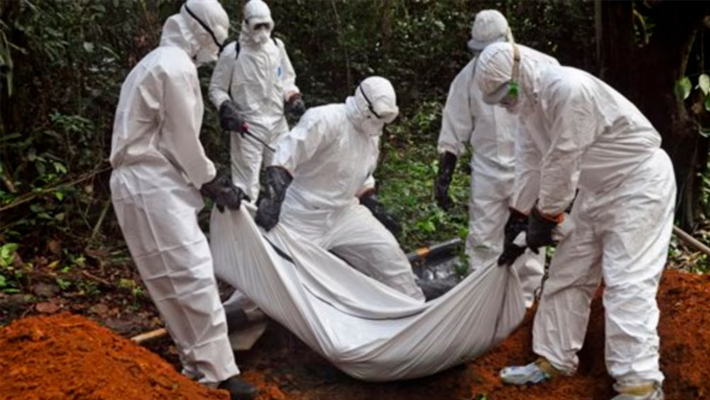
Ebola deaths in DR Congo hit 3,200
Ebola virus continues to spread in the eastern provinces of the DRC, with more than 3,200 deaths reported, the UN said.
Education
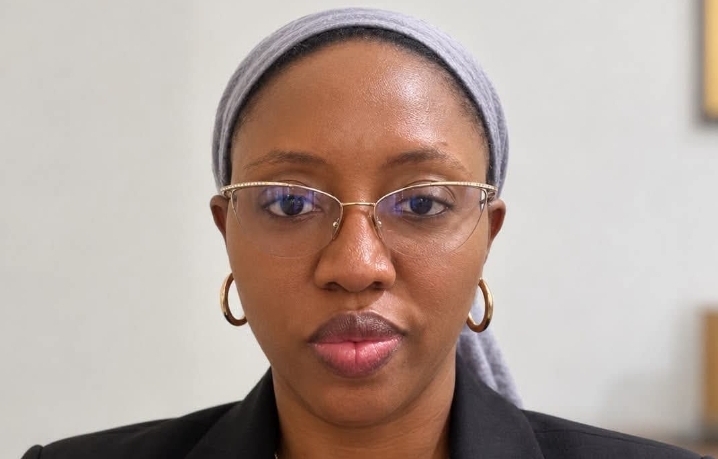
NOUN appoints Ramatu Ibrahim as acting bursar
NOUN said Ms Ibrahim’s appointment took effect from Tuesday, September 8, 2026, and would remain in force until further notice.

States
Yayi can’t win Ogun election, he is Sulaimon Ogunleye from Ekiti: Wale Adedayo
Mr Adedayo alleged that Mr Adeola was originally Sulaimon Ogunleye from Ekiti State but now falsely claims Ogun State ancestry for political gains.
World
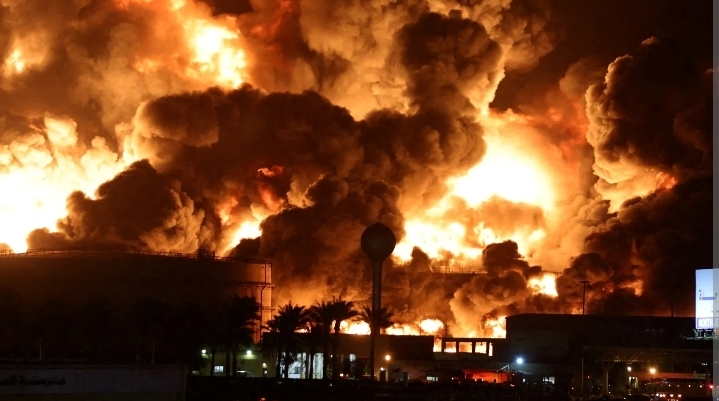
FG condemns fresh Houthi attacks on Saudi Arabia
“Nigeria regards the fresh hostilities as a serious threat not only to the security and sovereignty of Saudi Arabia but also to regional stability in the Middle East,” he said.
Education
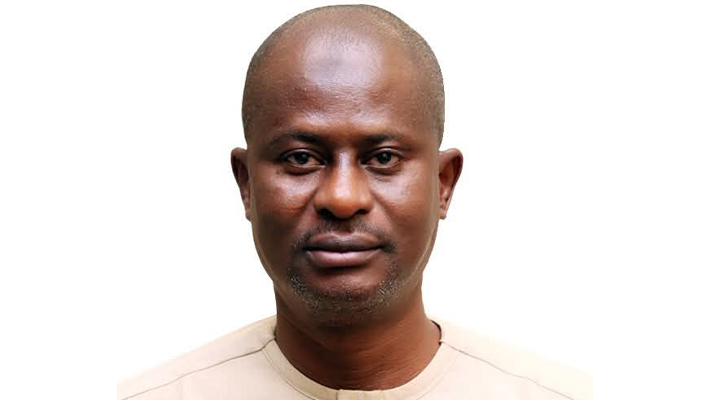
NOUN declares three-day mourning for slain bursar
The university said, “The mourning period commenced on Monday, September 7 and would end on Wednesday, September 9, 2026.

States
Nasarawa varsity seeks assembly intervention to end ASUU strike
Nasarawa State University, Keffi (NSUK), has appealed to the House of Assembly to intervene in the ongoing ASUU strike.


