

Factors fuelling suicidal ideation on social media

Over the past decade, suicide has gained prominence across all social strata, in Nigeria and the world over, chiefly due to evolving shift in lifestyles and the solipsism promoted by technological advancements.
The widespread acceptance and use of social media makes it a go-to place for firsthand information on happenings all over the world. This absorption to social media websites and apps comes with dire consequences on mental health and consumers’ wellbeing as it causes withdrawals from real life interactions among humans
Unfortunately, social media usage has popularised the act of suicide both directly and indirectly, from its means of information sharing to the influence and consequences it has on emotional health.
Suicide is a the act of an individual ending his/her own life intentionally. Suicide happens all over the world in all regions, across cultures, economic and social status and all age groups. Suicide accounts for high rates of deaths in all regions of the world today. According to the WHO, statistics reveal close to 800,000 people take their own lives every year.
As with other climes, attempted suicide is a crime in Nigeria, punishable by one year imprisonment under Section 327 of the Criminal Code Act, yet the country has one of the highest suicide rates in Africa.
Instructively, suicide risk factors and suicide-related behaviours have attained prominent dimensions on social media due to vast present of users on the platforms. In Nigeria alone, Statista revealed an estimate of 29.3 million social network users, this number is projected to increase to 36.8 million users by 2023.
Social networking platforms allow projection of activities, values and lifestyles on people who are not really connected, even when such projections are fake or simulated by professional “influencers.” This in turn affects real life trends and considerations.
As with sharing wins, people also share and are exposed to experiences such as loss in motivation, updates on the state of their physical and mental health, wrong influences, vulgar information, cyber bullying and other negative factors derived from their exposure on social media.
The relationship between social media and mental health is manifest as social media has been linked to mental health problems such as stress, anxiety and depression. In recent times, studies have been carried out establishing a link between mental health, lifestyle and social media.
Peoples Gazette spoke with Ibufubara Davies, a psychotherapist at Nungu Health, over the factors that contribute to the popularisation of suicidal thoughts on social media.

“In Nigeria, just look around. All the institutions influence this; from the family unit to the school to religion to work to the government. This is a broken country and the ripple effect is people’s mental health, ” Ms Davies said.
Factors that contribute to the prevalence of suicidal ideation on social media include the quality of life, cyber bullying, and suicidal contagion.
Being and living in Nigeria poses a range of obstacles to one’s mental health; from the Buhari-led administration constantly enforcing unfavourable
policies, rising unemployment alongside food inflation, rising insecurity and the effects of the COVID-19 pandemic.
Nigerians now find it difficult to pay school fees, pay rent, feed, and commute, the BBC reported on how Nigerian students would rather remain in foreign countries as students than return to Nigeria.
In 2018, Nigeria ranked 91th place on the Global Happiness Index report, this year Nigeria ranked the 116th happiest place in the world reflecting the country’s decline in comfort.

Suicidal contagion is an increase in suicide-related behaviours due to exposure to similar factors and actual suicide occurrences within one’s immediate group. This sort of information is often passed across through social media, garnering more attention as it is retweeted or reposted. A person who has suicidal thoughts can become motivated to carry out the act after learning of another’s case of suicide on the internet.
Ms Davies explained how suicidal contagion contributes to most of the posts that end up on social media. Of all her cases, 70 per cent is made up of people on social media considering ending their lives.
“A lot of people at some point have thought of killing themselves but they tend to push it aside and get on with life,” Ms Davies said, “so when they see other people doing it (or tweeting about it), it gives them courage to do the same.”

We have recently deactivated our website's comment provider in favour of other channels of distribution and commentary. We encourage you to join the conversation on our stories via our Facebook, Twitter and other social media pages.

More from Peoples Gazette

States
Independence: NBA urges Nigerians to expect better future
The NBA said that ordinary Nigerians should be deriving benefit from the subsidy removal rather than hardship.

Agriculture
FG tasks ECOWAS on leveraging financing strategies for agroecology
The federal government has urged stakeholders in the agriculture and finance sectors in the West Africa region to leverage financing strategies to enhance agroecology practices

Politics
Katsina youths pledge to deliver over 2 million votes to Atiku
“Katsina State is Atiku’s political base because it is his second home.”

Sport
U-17 Women’s World Cup: Flamingos face North Korea in crucial clash
Nigeria’s Flamingos will face North Korea on Friday in their final Group B fixture, hoping to advance to the knockout phase.

NationWide
Nigerians hold 89% of cash outside banks as money supply rises to N146.6 trillion
Cash held outside Nigeria’s banks increased to N4.92 trillion in September 2026, accounting for nearly nine out of every N10 in circulation.
Heading 1
NEC backs 90-day plan to ease hardship, lower food and transport costs
NEC endorsed a 90-day economic action plan to ease the cost of living for Nigerians, focusing on food affordability and household support.
Health
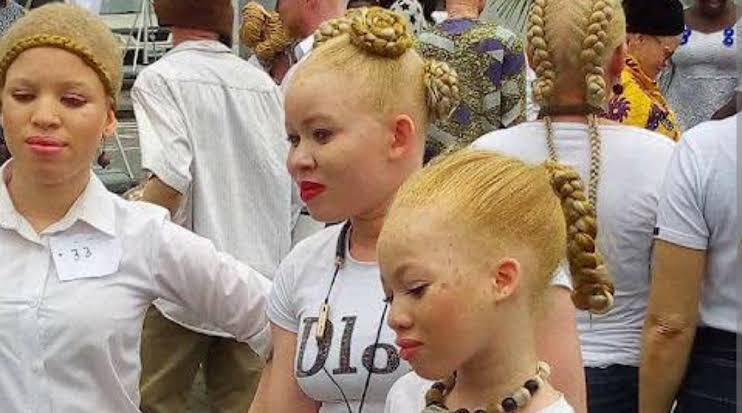
Nigeria demands protection for people with albinism, leprosy
Nigeria demands stronger international protection for persons with albinism and leprosy, warning that discrimination and social exclusion persist despite advances in treatment.


Sport
Chelle invites 31 players ahead of U-23 AFCON qualifier against DR Congo
The team list was posted on the Super Eagles’ X handle on Thursday.


